What Mainstream Brands Can Learn from Luxury: Packaging Première 2026 Review
Couldn't make it to Milan? Here are our key takeaways from the three-day event.
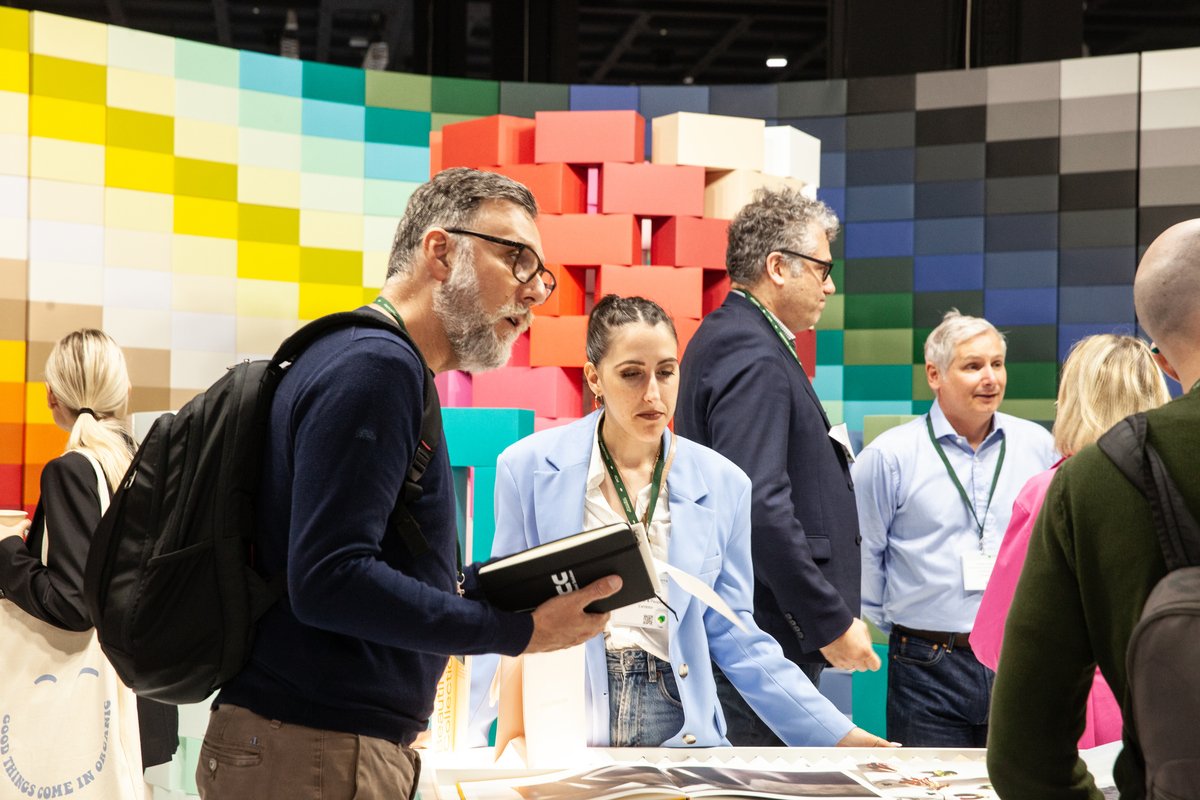
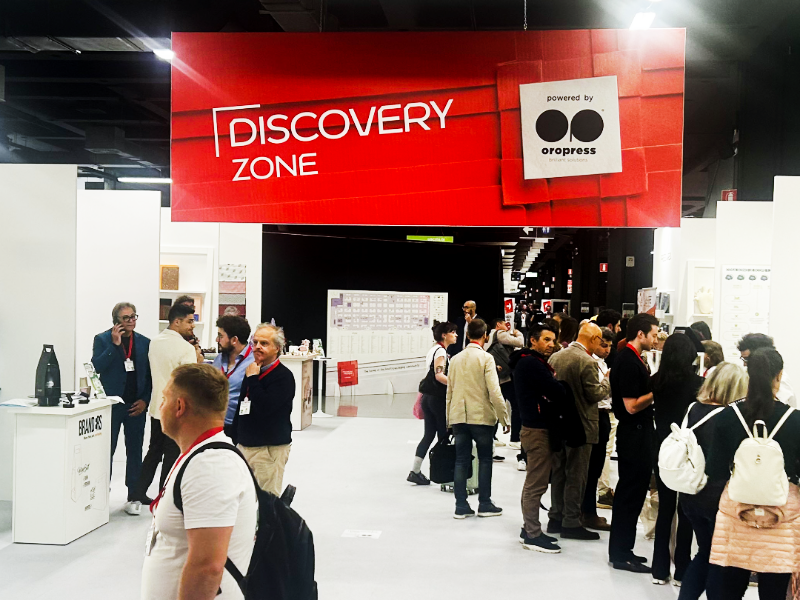
When you think of Milan, fashion immediately springs to mind. The city where haute couture trends emerge before filtering down to high street collections worldwide. But there's another parallel runway in Milan that deserves equal attention, and it's transforming how we think about custom corrugated boxes and packaging design. We headed to Italy this week for Packaging Première 2026, held at Allianz MiCo in Milan, a three-day event that welcomed over 8,000 visitors and showcased the best of luxury packaging innovation. While Leyland Packaging operates firmly in the mainstream sector, our time in Milan reinforced a crucial insight: just as fashion trends trickle down from couture to everyday wear, packaging innovation flows from luxury to mainstream markets. The question isn't whether these trends will reach your business — it's how quickly you'll adopt them.
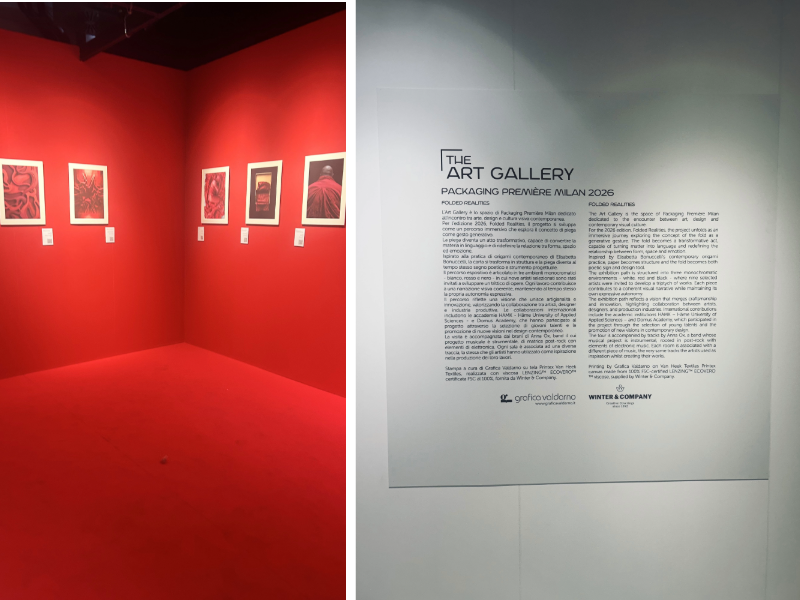
Packaging Première isn't your typical industry trade show. The experience begins before you even reach the exhibition floor, with an installation called 'Folded Realities' — a premium art gallery experience that sets an entirely different tone. Calming, contemplative, and inspiring, this curated space showcased how art and design interact within packaging, redefining boxes and containers as expressive art pieces rather than purely functional transit solutions.
It's the kind of theatrical flair the Italians do so well, and it immediately established the event's central premise: packaging deserves to be treated as seriously as the products it protects – an approach reserved for luxury brands alone.
The Sensory Revolution: Why Unboxing Aesthetics Matter for Every Brand
When was the last time your packaging made someone pause, feel something, or share their unboxing experience? Throughout Packaging Première, one theme dominated: the sensory unboxing aesthetic. Whether you're a luxury skincare brand or a mainstream e-commerce retailer, the moment a customer opens your package is a critical brand touchpoint — and it matters more than ever.
Contemporary origami techniques were everywhere at the show. We saw remarkable examples of flat-packed boxes that unfold to create containers in ways that feel slow, purposeful, and highly creative. These weren't just clever engineering exercises; they were crowd-pullers that stopped visitors in their tracks. The message? The act of opening itself can be part of the product experience.
For businesses creating bespoke packaging for mainstream markets using corrugated boxes, this translates into tangible opportunities. While you may not need hand-folded origami, thoughtful structural design — secure locking tabs, intuitive opening mechanisms, satisfying reveals — elevates the everyday unboxing into something memorable.
Tactile Innovation: When Paper Feels Like Leather
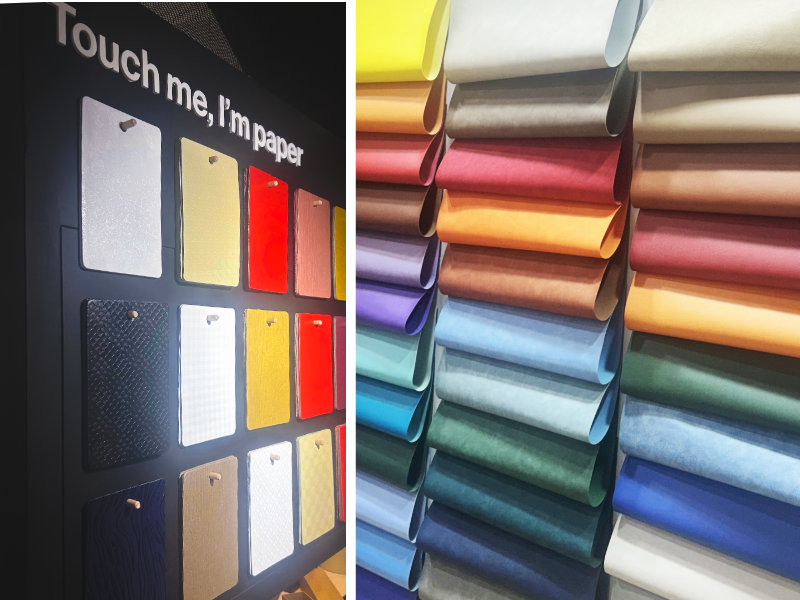
The materials on display at Packaging Première represented a significant shift in sustainable packaging innovation. Right now, there is a surge in recycled content within the luxury market. What really caught our attention, however, was the tactile revolution happening with packaging materials. Heavy, rough-felt surfaces took centre stage throughout the exhibition. Boards and papers that looked and felt like they had the same tactile qualities normally associated with leather. Cotton-based papers with barrier treatments. Linen finishes. One display proudly proclaimed "Touch me, I'm paper" while another championed "Be Kind, Be Linen."
This trend matters because texture communicates value instantly. When someone touches your packaging before they see your product, that sensory experience forms an immediate impression of quality. The good news? These materials aren't exclusively for luxury applications. As manufacturing scales and adoption increases, textured sustainable materials become increasingly accessible for bespoke packaging solutions across all market segments.
Shape, Colour, and the Elevation of Corrugated Board
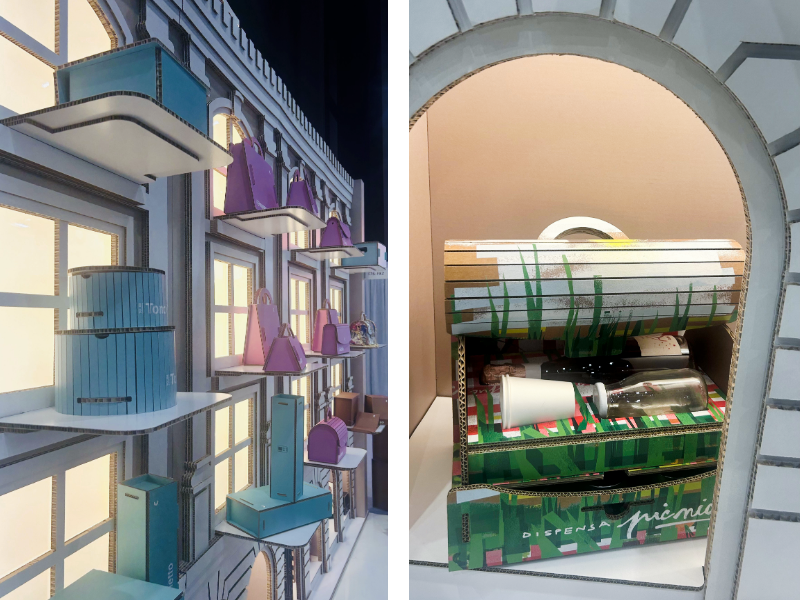
One of the most striking displays demonstrated how detailed shape and colour use can elevate corrugated board — our industry's humble workhorse material — into something with genuine aspirational appeal. We saw packaging shaped like miniature handbags, each one a sculptural piece that would look at home in a boutique window. Black and white outline 'fashion houses' with plinths showcased products with a clean, minimalist aesthetic that gave packaging centre stage. The exhibition stand itself was also constructed from board, demonstrating the material's remarkable versatility. Some examples were housed in their own illuminated 'nooks' that drew the eye and positioned packaging as art. If Fortnum & Mason or Harrods sold packaging, this is precisely how they'd present it. But there's nothing preventing mainstream companies from borrowing this confidence for their own packaging.
Affordable Luxury: The Inside-Out Approach
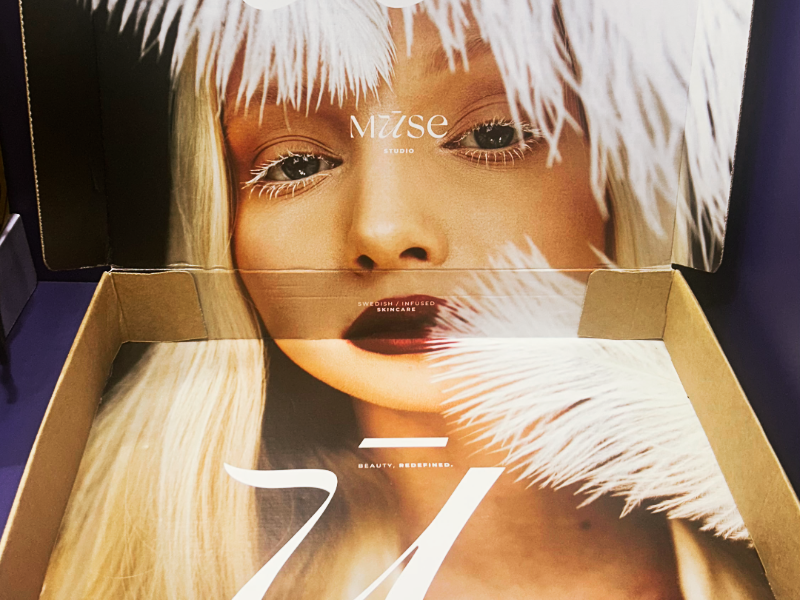
Not every innovation at Packaging Première required an unlimited budget. One of the most practical takeaways came from Muse Studio Sweden, a skincare brand that demonstrated the power of contrast - subtle outer packaging with visually striking colour printing inside.
This approach is remarkably affordable and delivers maximum impact at the moment that matters most — when the customer opens the box. The technical execution is straightforward: print one side in full four-colour process and use a single colour or simple label on the exterior. The result feels premium without the premium price tag.
For businesses exploring custom corrugated boxes with budget constraints, this inside-out strategy represents a smart pathway to elevating perceived value. You're investing in the reveal, the moment of delight, rather than exterior branding that might be damaged in transit anyway.
Small Details, Significant Impact
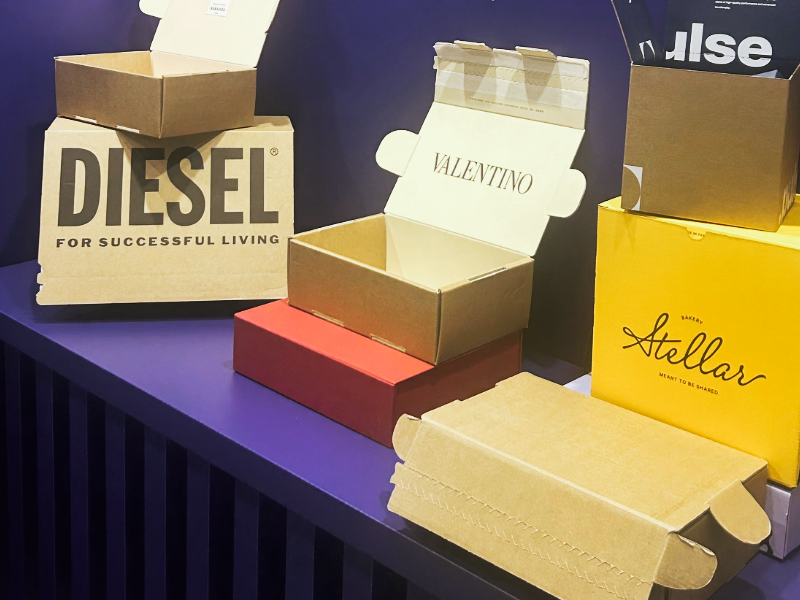
So often, the devil (and the delight) lives in the details. While branding can be minimal, almost understated, incorporating secure locking tabs into the structural design of bespoke packaging not only looks more premium but also provides genuine functional benefits for shipping security. These small details matter. They communicate care, consideration, and quality consciousness. When customers receive packaging that feels thoughtfully engineered rather than merely adequate, it colours their perception of everything inside. And crucially, these aren't luxury-exclusive features… intelligent structural design is accessible at any scale.
A recurring theme throughout Packaging Première was packaging achieving premium quality while being manufactured from 100% secondary fibres. This wasn't positioned as a compromise or an alternative — it was simply the standard. If ultra-premium products can proudly tout recycled content, any hesitation about sustainable materials signalling "lower quality" evaporates. The conversation has shifted from "Can we afford to be sustainable?" to "Can we afford not to be?"
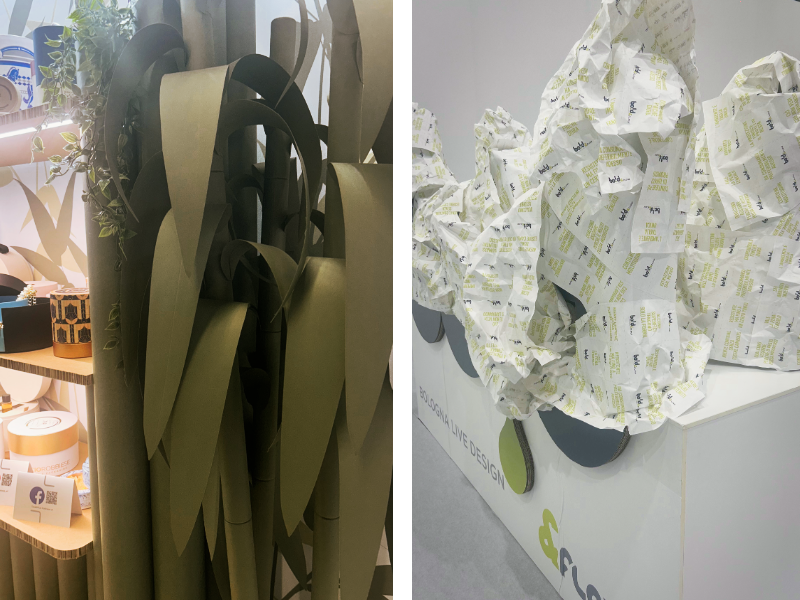
One of the most eye-catching displays came from Bo!d, who created genuine art installations using void fill paper. It might seem like an afterthought — the protective material that fills empty space in a box — but it's another customer touchpoint, and increasingly, an opportunity for brand expression.
The practical consideration here extends beyond aesthetics. Void fill serves a critical protective function in packaging innovation, particularly for e-commerce applications. But as Bo!d demonstrated, it can be branded, coloured, and designed to reinforce your identity. When customers unpack an order, every element they touch is a brand impression. Why waste any of them?
Playfulness in Premium Spaces
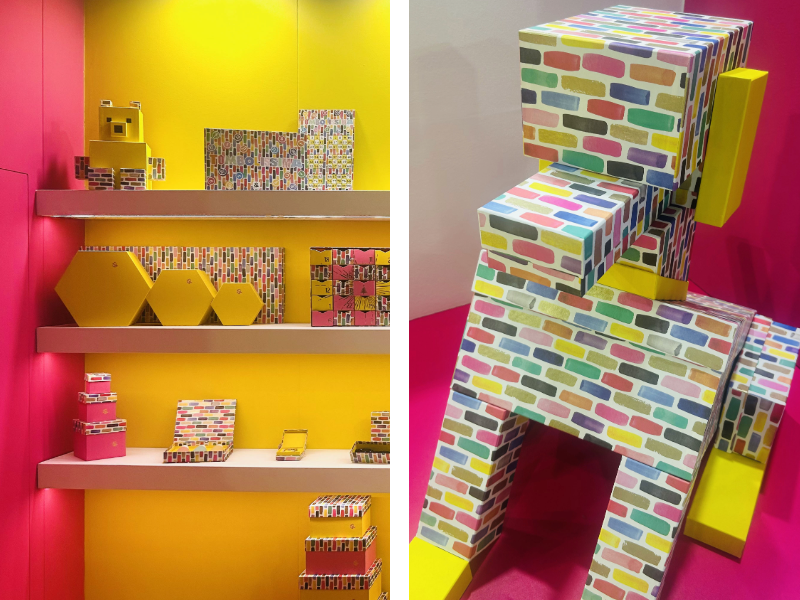
Not everything at Packaging Première was serious minimalism and hushed reverence. Several exhibition stands injected genuine playfulness into their presentations — bright pink and yellow colour schemes, unexpected whimsy, and installations to make visitors smile.
This matters because packaging doesn't have to choose between premium and personable. The most memorable brands often blend sophistication with approachability. Your custom packaging can signal quality and professionalism while still reflecting personality and warmth. These aren't contradictory goals.
Material Innovation: Woven Impact
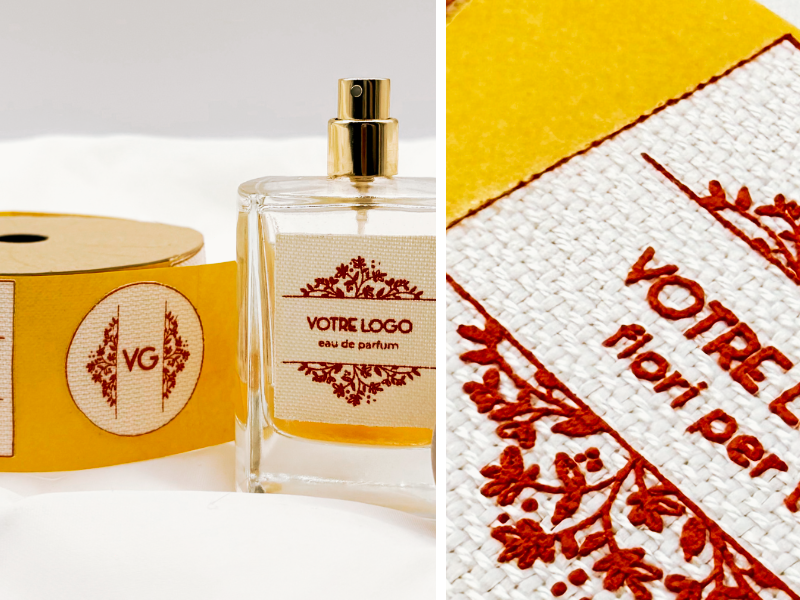
One standout innovation came from Furlanis with their 'Woven Impact' solution. Nominated in the Sustainable Materials category for Avant-Garde 2026 Awards, this self-adhesive fabric label represents the kind of crossover innovation where luxury sector R&D produces solutions that rapidly become viable for broader applications.
Premium labelling solutions like woven fabric labels were once exclusively luxury territory. But as manufacturing processes mature and demand increases, these options become accessible to mainstream brands looking to differentiate their packaging materials without complete custom redesigns.
The Trickle-Down Effect: From Runway to Your Warehouse
The fashion analogy we opened with isn't superficial. When a couture house debuts an unexpected colour palette, texture, or silhouette, it doesn't stay on the runway. Within months, high street retailers adapt and democratise those trends. The same pattern plays out in packaging innovation.
Today's luxury packaging experiments become tomorrow's mainstream expectations. The textured papers, the sustainable materials with premium performance, the attention to unboxing experience, the structural creativity—these aren't permanent differentiators for luxury brands. They're temporary advantages that will shortly become baseline expectations for custom corrugated boxes across all sectors.
The question for mainstream brands isn't whether to learn from luxury packaging trends. It's whether you'll be an early adopter or a late follower. The businesses that translate these innovations first, adapting them intelligently for their context and budget, will gain meaningful competitive advantages in crowded markets.
Bringing Milan Home
Walking through Packaging Première, surrounded by packaging innovation at its most ambitious and aesthetically accomplished, reinforced something we've long believed at Leyland Packaging: the humble corrugated box has untapped potential.
Not every business needs hand-crafted origami or Italian design flair. But every business can benefit from asking better questions about their packaging: How does this feel? What does the opening experience communicate? Are we considering sustainability as seriously as our customers expect? Could simple structural improvements or material choices elevate this from adequate to memorable?
The answers to those questions increasingly don't require luxury budgets. They require luxury thinking — and a willingness to see custom packaging not as a necessary expense, but as an extension of your brand and product experience.
Milan showed us the future of packaging. The good news? That future is more accessible than you might think.
Packaging Première takes place annually in Milan, showcasing the latest innovations in luxury packaging design, sustainable materials, and packaging technology. For businesses interested in applying these insights to custom corrugated boxes and bespoke packaging solutions, the trends emerging from events like this provide valuable strategic direction.